AbbVie (ABBV) Stock Analysis: Humira Decline, New Drug Growth, and Technical Consolidation
$228.47
06 Mar 2026, 17:58
Neutral


Join Minipip Academy and access free courses in investing, trading, economics, and more.
Sign Up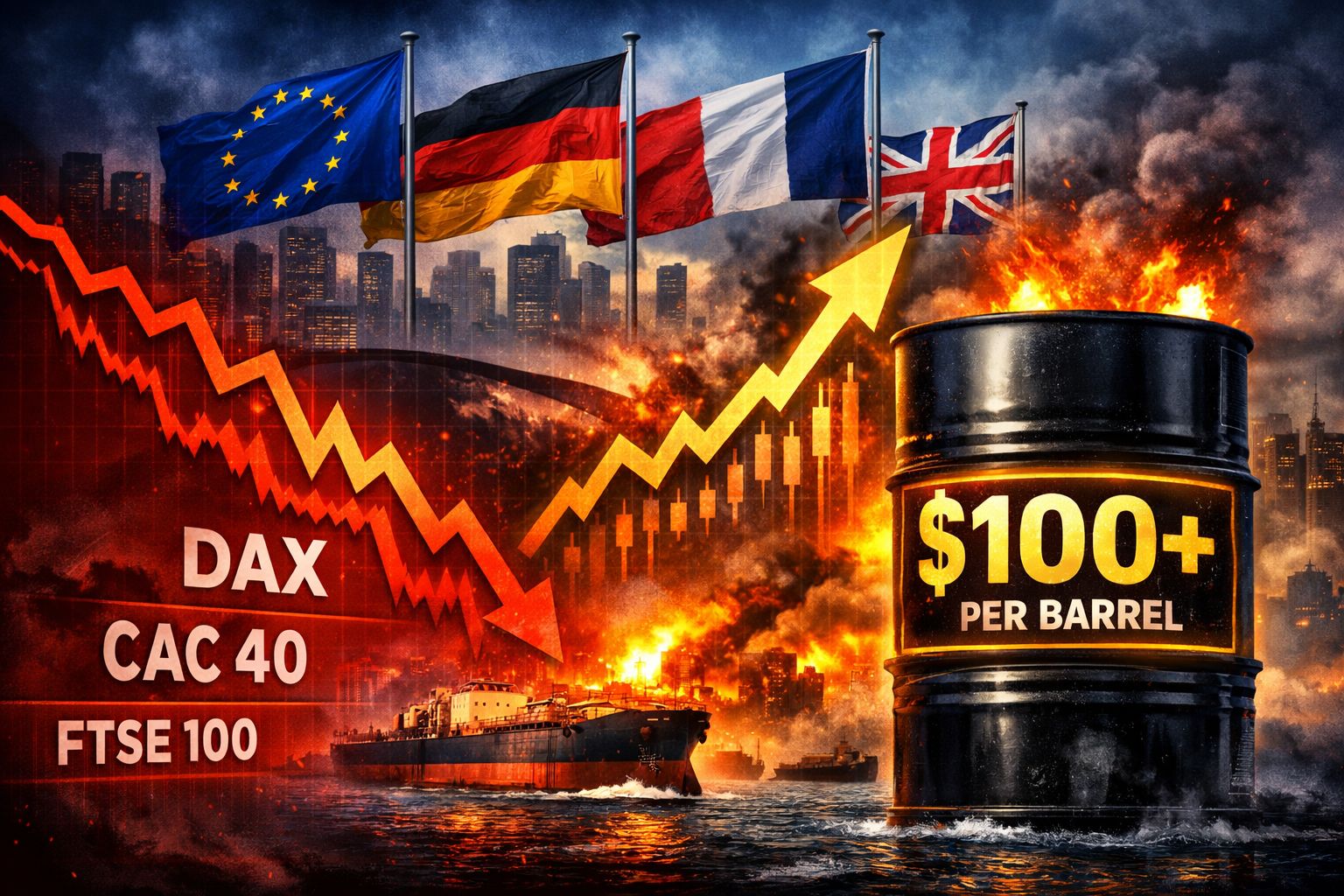
AI


Energy shock pushes crude above $100 and raises fears of inflation, weaker growth and stock market volatility
European stock markets began the week under pressure as oil prices surged sharply due to escalating conflict in the Middle East. Investors reacted to concerns that disruptions to global oil supply could trigger higher inflation and slower economic growth.
Major European indices opened significantly lower:
The market weakness reflects rising uncertainty over energy supply and geopolitical tensions.
09 03 2026 European stocks slip…
Oil Prices Jump Above $100
Crude oil prices surged after fresh military strikes were reported across Iran over the weekend. Oil infrastructure and storage facilities were among the targets, raising fears of significant supply disruption.
At the same time, several Middle Eastern producers — including Kuwait, Iran and the United Arab Emirates — have reportedly reduced output. Tanker traffic through the Strait of Hormuz, one of the world’s most important oil shipping routes, has also slowed dramatically.
Key developments in the oil market include:
Around one-fifth of global oil supply normally passes through the Strait of Hormuz, meaning prolonged disruption could have major consequences for the global economy.
09 03 2026 European stocks slip…
Political Developments Add to Uncertainty
The geopolitical situation remains highly uncertain. Iran has reportedly appointed Mojtaba Khamenei, the son of the late Ayatollah Ali Khamenei, as its new Supreme Leader.
This development suggests the Iranian leadership may not be willing to compromise quickly, increasing the risk of further escalation.
Meanwhile, US President Donald Trump has described the surge in oil prices as a “small price to pay” for removing Iran’s nuclear threat, signalling that military operations could continue.
For financial markets, the lack of clarity around how long the conflict may last is contributing to heightened volatility.
Impact on Share Prices and Key Market Sectors
Rising oil prices often have mixed effects on global stock markets.
Sectors that may benefit include:
However, several industries could face pressure:
A sustained surge in oil prices could also push inflation higher, forcing central banks to keep interest rates elevated for longer. Higher borrowing costs tend to weigh on growth stocks and equity valuations.
Weak Economic Data Adds to Market Concerns
Alongside geopolitical tensions, investors are also digesting weaker economic data from major economies.
Recent figures showed:
Meanwhile, US labour market data released last week showed the economy unexpectedly lost jobs in February and unemployment rose to 4.4%.
This combination of weaker economic data and rising energy prices has raised fears of a difficult environment for central banks trying to balance inflation control with economic growth.
Outlook for Investors
The sharp rise in oil prices has reintroduced energy supply risk as a key driver of global financial markets. If tensions in the Middle East persist, crude prices could remain elevated and continue to influence equity markets.
Investors will closely watch:
For now, heightened geopolitical risk suggests markets may remain volatile in the coming weeks.
Sources: (BBC.co.uk, Investing.com, Reuters.com)

Tradable assets:
Min.Deposit:
Max Leverage:
FCA:

Rating:


 Earnings Calendar
  Economic Calendar
  VAT Calculator
  Tax Free Childcare Calculator
 Percentage Calculator
 Compound Interest Calculator
  Loan Overpayment Calculator
 Mortgage Calculator
 Credit Card Calculator
 Investing
  Economics
 Trading
  Technical Analysis
  Personal Finance
 Calculator